← all cities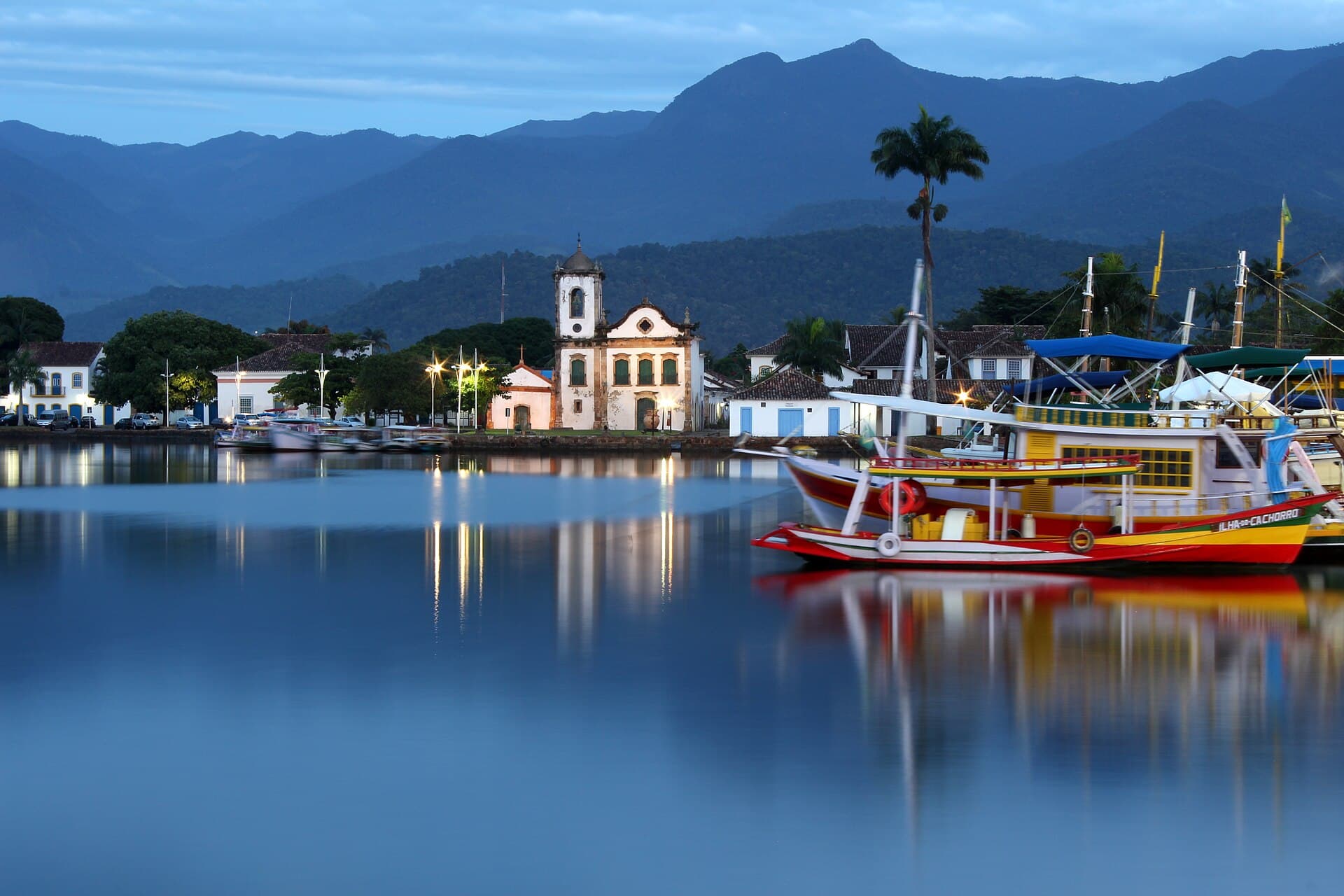
RJ · Southeast
Paraty
beachculturequietnature
Paraty is a colonial port between Rio and Sao Paulo, with cobblestone streets that flood at high tide and a bay of 60-plus islands behind it. Nomads pick it for a quiet, walkable historic center, schooner-accessible beaches, and proximity to both major airports. The scene is small and culture-heavy (literary festival in late winter), not a coworking hub.
cost—airbnb—temp23.2°Crain190d/yr
Climate
Avg humidity
83%open-meteo
Rainy days per year
190 daysopen-meteo
Avg temperature
23.2°Copen-meteo
Coolest month avg
19.9°Copen-meteo
Warmest month avg
26.3°Copen-meteo
Connectivity
Median download
157 Mbpsresearched (estimated)
Mobile download
25 Mbpsresearched (estimated)
Median upload
80 Mbpsresearched (estimated)
Guide
Where to stay
Centro Histórico
Cobblestone colonial core, car-free, pousadas inside 17th-century buildings; touristy but the iconic experience.
Pontal
Across the river from the historic center, residential, walkable to old town, cheaper rentals.
Jabaquara
Beach neighborhood just north, quieter, monthly stays more affordable.
Trindade
Beach village 30km south, bohemian and isolated; for nomads wanting jungle/beach over colonial.
Famous for
UNESCO World Heritage colonial centerCachaça production (gold rush trade route)FLIP literary festival (July)Schooner trips to Saco do Mamanguá and Ilha do PeladoTrindade beaches and Pedra que Engole natural pool
Getting around
- •4-5h drive from both Rio and São Paulo; bus service via Costa Verde and 1001.
- •Historic center is car-free — walk everywhere or take a tuk-tuk.
- •Boat schooners are the standard way to visit the bay's islands and beaches.
- •Local buses connect Paraty to Trindade and Paraty-Mirim (40 min-1h).
- •Uber works in town but supply is thin; pousadas arrange transfers.
Practical tips
- •Cobblestones are brutal — wear sturdy shoes, no heels, expect ankle work.
- •Center floods deliberately at king tides (built that way) — check the calendar.
- •Rainy season Dec-Mar — heavy and persistent.
- •English okay in tourist pousadas, limited elsewhere.
- •Internet is decent in town but weak in Trindade and the islands.
Pros
- ✓Genuinely beautiful and historically intact — feels frozen in time.
- ✓Combines colonial culture with surrounding wild beaches and rainforest.
- ✓Walkable, safe, calm — easy on the nervous system after Rio/SP.
- ✓Cheaper than Búzios or Trancoso for similar quality.
Cons
- ✕Heavy rains half the year; Costa Verde is the wettest part of SE Brazil.
- ✕Small nomad scene; not many coworkings or fellow remote workers.
- ✕No nearby airport; long ground transfers from Rio/SP.
- ✕Tourist-economy pricing in the historic center.
Updated 2026-06-07 · medium confidence
Photo: Vani Ribeiro · CC BY-SA 3.0 · Wikimedia Commons